

The contract lifecycle management (CLM) market is in the middle of a structural shift. The first wave of AI gave legal teams faster drafting, quicker redlines, and more accessible research. The problem was, these AI improvements were bolted onto or operated separately from legacy platforms, limiting their ability to understand workflows, interact with business systems, or take meaningful action across the contract lifecycle.
The next phase in this CLM evolution involves agentic AI, whereAI evolves from a disconnected legal assistant to an active legal participant.
Instead of simply responding to prompts, agentic systems can pursue goals, make decisions, and execute tasks across workflows. For in-house legal teams, that distinction isn’t academic; it’s the difference between shaving minutes off a task and fundamentally changing how legal work gets done.
But like any meaningful shift in technology, agentic AI comes with tradeoffs.
To help in-house legal teams separate the signal from the marketing noise, LinkSquares has prepared a SWOT analysis on the current state of agentic legal AI.
Strengths: From Bottleneck to Business Accelerator
The most immediate advantage of agentic AI is simple: it does the work.
Traditional legal tech, even with Generative AI layered in, still depends on humans to move tasks forward: review a contract, flag an issue, route the approval, and follow up on the obligation. While AI assistants can suggest actions and coach human users, they don't actually do the work.
Agentic systems can.
Agentic AI can intake a contract request, identify missing information, route it to the right stakeholders, generate a draft aligned to company standards, flag deviations during negotiation, and track obligations post-signature, all without requiring constant human intervention.
This shift shows up in three meaningful ways:
End-to-end workflows that work for you
Instead of drafting in one tool, reviewing in another, and tracking obligations somewhere else, agentic AI operates across the lifecycle. It connects intake, negotiation, execution, and post-signature management into a single, continuous system.
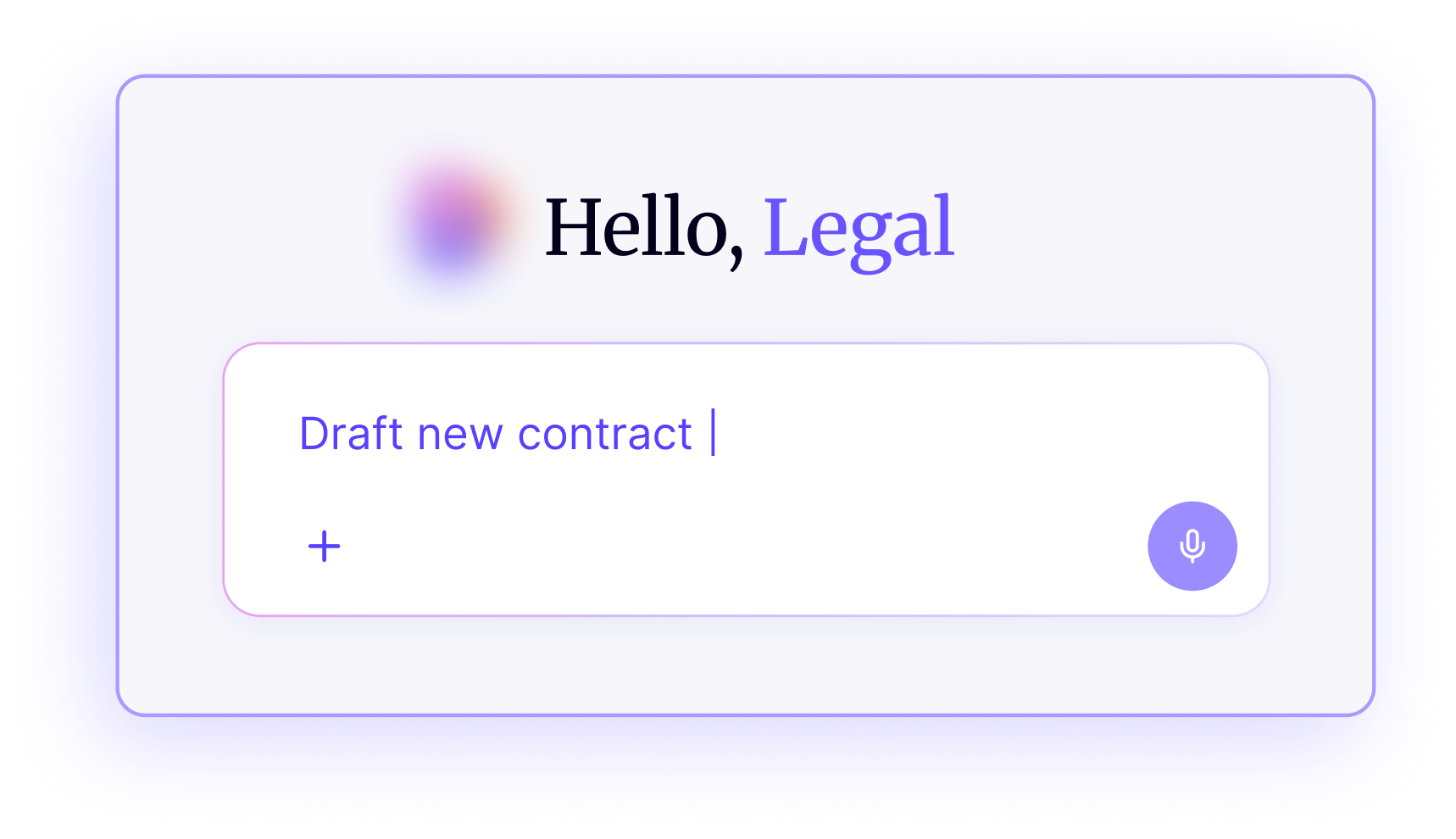
The LinkSquares Agentic Platform does just this through a single, natural language chat interface, adapting to the distinct needs of each business user.
Context-aware decision making
Because agentic systems operate on structured contract data, not just static documents, they can make decisions based on risk, value, and business context extracted from your contract repository. A $10K vendor agreement and a $10M enterprise deal do not just look different; they are handled differently because the agentic system can see how they've been handled in the past.
Real operating leverage for legal teams
With agentic AI, legal teams can handle more volume without increasing headcount, reduce turnaround times without cutting corners, and shift focus toward high-impact work instead of administrative overhead. That's a tangible, measurable improvement over AI assistants and chatbots.
In short, agentic AI gives legal teams something they have historically lacked: scalability without compromise.
Weaknesses: Architecture Still Matters More Than Marketing Suggests
For all the promise, not all agentic AI is created equal.
A significant portion of the market is attempting to retrofit agent-like behavior onto legacy systems. The result often looks impressive in demos, but breaks down in practice.
The reason is structural.
Agentic AI depends on three things that most older platforms were not built to support. Here are the areas where they often falter:
Disparate systems and data sources
If contracts are still treated as flat documents rather than dynamic data objects, AI can summarize them, but cannot reliably act on them. True agentic workflows require systems that understand relationships, including obligations, timelines, financial terms, and dependencies across agreements.
Lack of workflow orchestration
Agents don’t just generate outputs, they trigger actions. That requires deep integration into workflows, approval chains, and business systems. Without that foundation, so-called agents become little more than advanced chat interfaces.
Inability to learn and adapt to the user
Agentic systems continuously evaluate context, take action, and adjust based on outcomes. Platforms that can’t do this struggle to deliver context to end users or improve over time. This constant “starting from scratch” requires re-teaching the platform and slowing outcomes.
there is a widening gap between AI-enabled features and agentic-first AI systems. Closing that gap requires more than adding AI on top of existing software. It requires rethinking the underlying architecture, which not every vendor has done.
Opportunities: Redefining Legal’s Role in the Business
If the strengths of agentic AI are operational, the opportunities are strategic.
This is where things begin to shift.
Contracts become a system of action, not record
Historically, contracts have been where information goes to sit. Even in modern CLM systems, contracts are better organized, but still passive.
Agentic AI changes that. Contracts become active inputs into business operations. They trigger workflows, inform decisions, and continuously update based on new context, whether that is regulatory change, renewal timing, or shifting commercial terms.
Legal becomes proactive instead of reactive
Instead of responding to requests and issues as they arise, agentic AI allows legal teams to get ahead of them. Agentic systems can surface risk before it materializes, flag revenue leakage before it happens, and recommend actions based on real-time data.
That is a fundamentally different operating model.
True business self-service, with guardrails
One of the long-standing tensions in legal operations is balancing speed with control. Business teams want autonomy, legal needs oversight.
Agentic AI makes that balance achievable. It can guide non-legal users through contract creation and negotiation within predefined guardrails, reducing dependency on legal without increasing risk.
Continuous compliance in a dynamic environment
Regulatory change is accelerating, particularly around AI governance and data usage. Agentic systems can monitor changes, identify impacted agreements, and initiate updates across a contract portfolio (pending human signoff on the final results).
Compliance shifts from periodic, manual review to continuous, automated alignment.
Taken together, these opportunities point toward a larger shift: legal teams moving from service providers to operational partners embedded in how the business runs.
Threats: Risk, Trust, and the Cost of Getting It Wrong
The same capabilities that make agentic AI powerful also introduce new risks.
Legal teams will need to navigate these carefully.
Over-automation without oversight
Agentic software can perform work at staggering speed, propagating mistakes far and wide. Legal teams are kept up at night worrying about modest business risk, let alone systemic failures. If agentic systems act without appropriate controls, the risk is not just inefficiency; it is incorrect approvals, flawed contract language, and missed obligations at scale.
Governance cannot be an afterthought. It has to be built into how the system operates.
Data security and confidentiality concerns
Contracts contain some of the most sensitive information in the business. Expanding AI access to that data raises legitimate concerns about exposure, misuse, and compliance with evolving data regulations.
Any agentic system must operate within strict permissioning, auditability, and security frameworks.
Vendor agentic white-washing
As with any emerging category, marketing is moving faster than reality. Many vendors are labeling existing AI assistants as agents without delivering the underlying capabilities.
For buyers, the risk is investing in tools that promise transformation but never deliver.
Change management and organizational resistance
Even when the technology works, adoption is not guaranteed. Legal teams, by necessity, are risk-aware. Shifting to systems that take action, not just provide insight, requires a level of trust that takes time to build.
Without thoughtful rollout and clear governance, even the best systems can stall.
Conclusion: In-House Legal Teams Need a Platform They Can Trust to Deliver Outcomes, Responsibly
Agentic AI is not a future concept. It is already reshaping how legal work can be done.
The takeaway is not that every legal team should rush to adopt the latest agentic solution. It is that the criteria for evaluating legal technology has changed.
The question is no longer, "does this tool help my team work faster?". It is, "can this system understand my contracts, operate within my workflows, and take action in a way I can trust?"
That is a higher bar, and it should be.
The legal function sits at the intersection of risk, revenue, and regulation. Any system that operates in that space needs to reflect that complexity.
The platforms that succeed in this next phase will not be the ones that generate the best summaries or the fastest redlines. They will be the ones that can turn contracts into structured intelligence, connect that intelligence to business processes, and execute work reliably across the lifecycle.
That is the real promise of agentic AI.
For legal teams willing to engage with it thoughtfully, agentic AI is not just an efficiency play. It is an opportunity to redefine how legal contributes to the business.
How LinkSquares can help
LinkSquares is the leader in agentic-first contract lifecycle management for in-house legal counsel, recently recognized for high customer trust and satisfaction based on verified customer feedback. The LinkSquares Platform empowers you to turn contracts into action with AI built for trust and control with workflows made to work for you.
Start instantly and scale easily with the first and only all-Agentic platform built from the ground up. Contact LinkSquares today.